A Gaza father’s grief captures the human cost of a winter war
At Shifa Hospital, a father pleads with his 15-year-old son to wake up after an Israeli strike killed the boy and a cousin as they searched for firewood. The Israeli military says it targeted militants; relatives dispute that account. The episode lands amid a bitter winter, damaged shelter, and disputed casualty tallies since an Oct. 10 ceasefire.
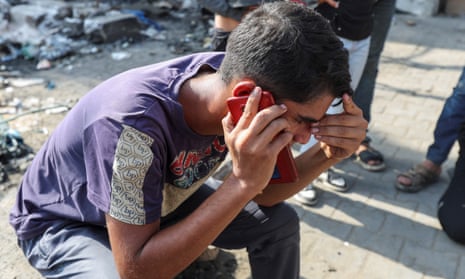
A father refusing to accept what happened
In Deir al-Balah in central Gaza, Yusuf Zawara stood over the body of his 15-year-old son, Mohammad, at Shifa Hospital and spoke to him as if the boy could still answer. Family members tried to steady him while he repeated the same request: wake up. The scene became a stark portrait of grief in a conflict where families often receive news in fragments, sometimes only after a body arrives at an overcrowded hospital.
According to relatives, Mohammad and his 13-year-old cousin were collecting firewood when an Israeli strike hit them. The family says the boys were near an area the Israeli military had described as safe, close to a boundary sometimes referred to locally as the “Yellow Line,” separating Israeli-controlled zones from other areas of Gaza. The family’s account alleges they were intentionally targeted, a claim that adds to Gaza residents’ fears that even routine survival tasks can become fatal.
Conflicting accounts of the strike
Israel’s military denied intentionally targeting children and said the strike was aimed at militants it says were planting explosives. That explanation is contested by the family, which says the boys were searching for fuel and wood in order to keep warm and cook in a winter where basic services have collapsed. As in many incidents during the war, the immediate details are disputed, and the gap between official statements and witnesses’ descriptions deepens mistrust on the ground.
The boys’ deaths occurred against a backdrop of precarious living conditions. Much of Gaza has lacked central electricity since the early days of the war, leaving many families to rely on scavenged materials, improvised stoves, and shared generators when fuel is available. With homes destroyed or unsafe, people have been living in tents or damaged buildings as winter storms and cold nights bear down.
Winter exposure and disputed casualty figures
Local health authorities say the winter has brought another kind of emergency: exposure. Gaza’s Health Ministry has reported that children have died from cold as families struggle to find blankets, fuel, and intact shelter. It also reports that more than 480 Palestinians have been killed by Israeli fire since a ceasefire that began on Oct. 10. Israel disputes the ministry’s figures but has not released alternative counts, leaving international observers to parse incomplete data while aid groups focus on immediate needs.
For families like Zawara’s, the debate over numbers is distant compared with the immediacy of loss. Collecting firewood, once a mundane chore, has become a high-risk trip, especially in areas near shifting lines of control. The grief inside the hospital illustrates how the war’s dangers extend beyond battlefields, reaching into the daily decisions parents and children make just to stay warm and fed.