Nvidia details Rubin platform at CES 2026, pitching steep reductions in AI computing cost
At CES 2026, Nvidia unveiled Rubin, a six-chip AI platform named for astronomer Vera Rubin. The company positioned the system as a major step in performance and efficiency, aiming to cut token-generation costs while supporting more demanding ‘agentic’ and reasoning-heavy AI workloads.
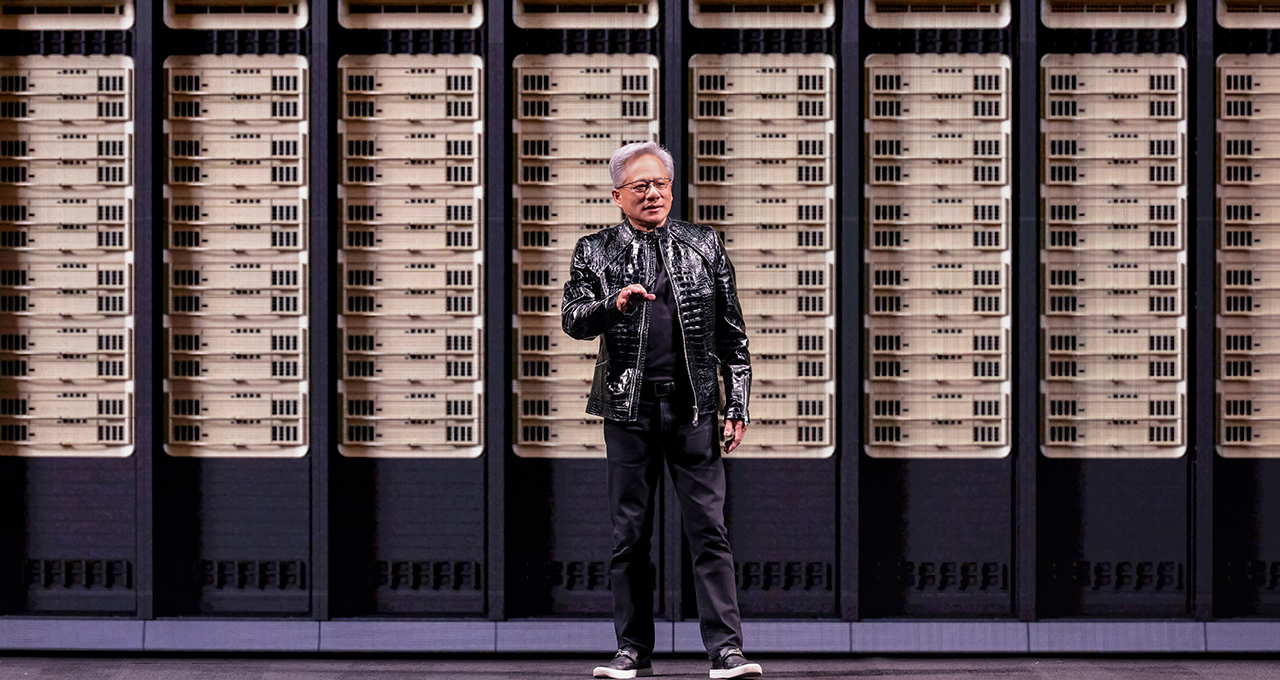
Nvidia used its CES 2026 spotlight to outline Rubin, its next-generation AI platform named for astronomer Vera Rubin, presenting the hardware-and-network stack as a tightly co-designed system meant to push both training and inference into a new scale of performance.
In the company’s framing, the bet is that AI progress is now constrained as much by interconnects, memory movement, and system-level bottlenecks as by raw compute. Rubin was introduced as an integrated, multi-component platform rather than a single chip announcement, emphasizing the importance of designing GPUs, CPUs, networking, and software in concert.
Nvidia also tied Rubin to the economics of AI deployment, arguing that the next wave of applications—reasoning models, agentic systems, and other compute-hungry approaches—will require a sharp reduction in the cost of generating and serving tokens. Lower costs, the company said, could expand adoption from frontier labs into more mainstream enterprise deployments.
The CES presentation highlighted how demand has shifted: customers want scale-out infrastructure that behaves like an AI factory, where speed, reliability, and total cost of ownership are as important as benchmark peaks. Nvidia described Rubin as built for that environment, spanning compute, networking, and storage-related optimizations.
The announcement also underscored competitive and strategic pressures around AI infrastructure. Large cloud providers continue to invest in their own silicon and systems, and rivals are pursuing alternative accelerators. Nvidia, however, is betting that end-to-end performance and a mature software ecosystem will keep it central to the AI buildout.
For developers and enterprises, the practical implications will come down to availability, integration into data-center roadmaps, and whether promised efficiency gains translate into real-world savings. Nvidia’s message at CES was that Rubin is designed not just to be faster, but to make large-scale AI meaningfully cheaper to run.