About 31,000 Kaiser Permanente health care workers strike across California and Hawaii
A large group of Kaiser Permanente workers walked off the job in an open-ended strike over staffing and pay, escalating one of the biggest health-care labor fights in the U.S. this year.
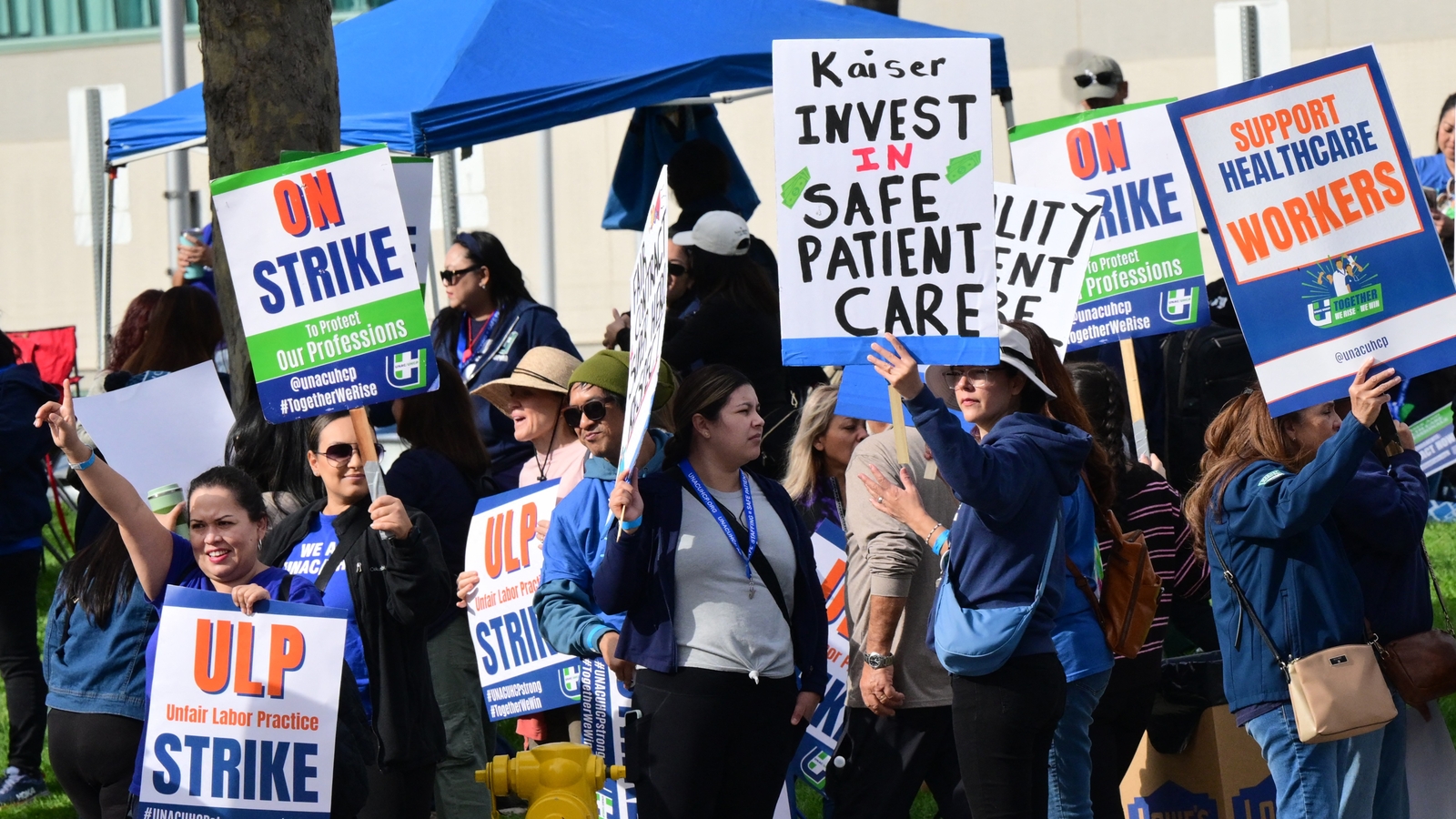
A major walkout hits one of the nation’s largest health systems
Tens of thousands of Kaiser Permanente health care workers across California and Hawaii began a strike Monday, with reports describing roughly 31,000 employees participating. The walkout is open-ended, meaning it is expected to continue until a new agreement is reached.
Workers represented by the United Nurses Associations of California/Union of Health Care Professionals say the dispute centers on safe staffing levels, fair compensation, and what they describe as delays in patient care. The group includes registered nurses as well as pharmacists, nurse practitioners, physician assistants and other specialized health professionals—roles that health systems rely on to maintain daily operations and specialty services.
What unions say they’re demanding—and why timing matters
Union leaders argue the staffing situation is not simply a workplace issue but a patient-safety one, especially when facilities run close to capacity. They say negotiations have dragged on and accuse Kaiser of failing to adequately address core issues at the bargaining table. Kaiser, like other large systems, has faced ongoing post-pandemic pressures, including retention challenges and higher labor costs.
The timing is significant: winter typically brings elevated respiratory illness and emergency-department demand, while health systems also contend with backlogs in elective procedures. A strike of this size can force the organization to rely on temporary staffing, adjust appointments, and prioritize urgent care—often at increased cost and with public attention focused on access.
Potential impacts on patients and the broader labor landscape
For patients, the most immediate concerns are appointment disruptions, longer wait times, and uncertainty about where to seek routine care. Health systems often implement contingency plans, but the effectiveness depends on scale, duration, and whether multiple locations are affected simultaneously.
More broadly, the strike fits into an extended wave of health-care labor actions where workers are pushing for enforceable staffing standards and wage growth that keeps up with cost-of-living pressures. The outcome may influence bargaining at other major providers as unions point to Kaiser’s settlement terms—whatever they become—as a benchmark.
What to watch next
- Whether Kaiser and the union agree to mediated talks to accelerate a deal.
- How patient services are prioritized if the strike extends beyond several days.
- Whether the settlement includes staffing language that can be measured and enforced.