U.K. police arrest dozens at London jail protest calling for release of Palestine Action prisoners
British authorities arrested scores of protesters outside a London jail as demonstrators demanded the release of Palestine Action prisoners and highlighted the case of a jailed activist reportedly on a renewed hunger strike.
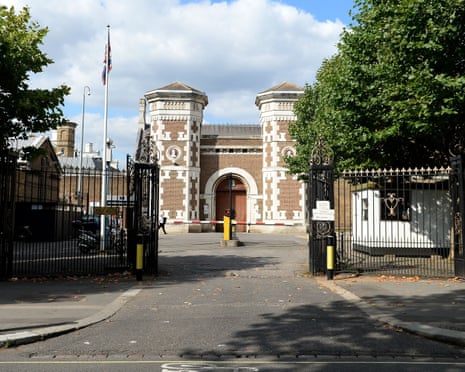
Arrests at a London jail
At least 86 protesters were arrested in London after gathering outside a jail to demand the release of Palestine Action prisoners, according to reporting summarized in the day’s international headlines. Demonstrators assembled at Wormwood Scrubs, a major West London prison, and police moved in to disperse the crowd.
Videos circulated from the scene show police shoving some protesters to the ground and handcuffing others. The arrests underscore the growing friction between protest movements and public‑order enforcement in Britain, especially on issues tied to Middle East politics and activism.
Focus on jailed activists and hunger strike claims
The protest also centered on a Palestine Action political prisoner identified as Muhammad Umer Khalid, described as having relaunched a hunger strike roughly two weeks earlier after prior health complications. Supporters portrayed the hunger strike as an effort to draw attention to detention conditions and the broader crackdown on the movement.
Organizers framed the arrests as an attempt to deter public solidarity actions, while authorities treated the gathering as an unlawful disruption at a secure facility. The clash reflects an increasingly confrontational environment around high‑profile political cases and protest rights.
Background and legal context raised by supporters
Protesters argued that multiple activists remain jailed as they await trial and that the government’s approach risks criminalizing political advocacy. Supporters linked the situation to the U.K. government’s use of terrorism‑related statutes and restrictions, describing it as a hardening posture toward disruptive direct‑action campaigns.
Critics of the protest, however, have argued that policing around prisons and critical infrastructure must prioritize safety, access control and public order. Officials have not, in this account, provided a detailed public breakdown of individual arrest charges beyond the general enforcement action.
What happens next
- Court processing for those arrested, including potential bail hearings and charging decisions.
- Further demonstrations, as organizers often respond to mass arrests with follow‑up actions.
- Ongoing attention to hunger strike claims and detention conditions, which can intensify public pressure.
The episode adds to a broader set of European debates about protest tactics, policing limits, and how governments handle politically charged cases.