India and the EU clinch a landmark free-trade pact after years of negotiations
India and the European Union have finalized a sweeping free-trade agreement designed to cut tariffs on most traded goods and deepen strategic ties. Leaders on both sides framed the deal as an economic and geopolitical milestone, though it still faces ratification steps.
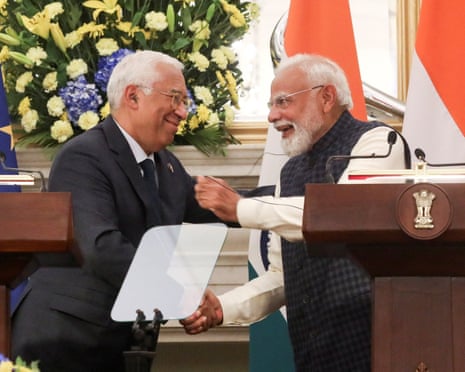
India and the European Union announced Tuesday, January 27, 2026, that they have concluded a long-sought free-trade agreement, a major step for two of the world’s biggest economic blocs after years of on-and-off bargaining. The deal is intended to lower barriers on the vast majority of goods moving between the partners and to reinforce political and strategic ties at a moment when both sides are seeking to diversify trade relationships.
The agreement aims to reduce or eliminate tariffs across a wide range of products, and officials promoted it as a significant opportunity for businesses that have long complained about high duties and complex rules. For Europe, the pact is pitched as a way to expand access to India’s large and fast-growing consumer market, while for India it is positioned as a pathway to strengthen exports and attract investment as supply chains shift globally.
Sectors expected to feature prominently include manufacturing and industrial goods, pharmaceuticals, and autos—categories where tariffs and regulatory friction have often been central sticking points. The deal also includes elements tied to broader cooperation, including mobility-related provisions that can affect professionals, students, and certain categories of workers, and parallel discussions on security and defense collaboration.
Supporters argue that lowering tariffs and providing more predictable trading rules should boost volumes over time, especially for categories where trade already exists but is constrained by price barriers. Indian exporters are expected to emphasize textiles, engineering goods, and other manufactured products, while European companies have focused attention on premium consumer goods and industrial equipment that can become more competitive as duties step down.
Not every product category is treated the same. Negotiators typically manage domestic sensitivities by carving out exclusions, setting long phase-in periods, or limiting commitments in politically sensitive areas. Those details matter, because the distribution of gains and costs will shape political support in both India and Europe as the agreement moves through required approvals.
The pact still requires formal ratification procedures, which can involve multiple institutions in the EU system as well as approvals on the Indian side. That means the deal is not yet fully in force, but the announcement signals that negotiators believe the remaining steps are manageable and that both sides want the economic and strategic signal sent quickly.
If implemented as outlined, the agreement would rank among the most consequential trade deals for each partner in years, reflecting a shared desire to expand market access while navigating a more fragmented global trade environment.